
Know Your Gas Flows Now. Prepare for What’s Next.
Methane management is changing. Satellites are improving visibility into releases, global markets are asking for better data, and renewable gas projects are creating new uses for methane. For operators, readiness starts with a practical question: How well do you understand the gas moving through your facility?
Three Developments Are Reshaping Methane Management
Methane regulations, monitoring technologies, and energy investments are moving at different speeds. Together, they give operators a clear reason to review the quality and usefulness of their gas measurement data.
Regulations and Buyer Expectations Reach Across Borders
Methane requirements increasingly connect gas production with the markets where the gas is sold. Current approaches include operating rules, reporting requirements, import conditions, emissions-related charges, and buyer standards. These requirements may overlap, but they are not the same.
Implementation schedules can change, but a delayed deadline does not necessarily remove measurement, reporting, or verification expectations.
For operators, the takeaway is not that every facility faces the same obligation. It is that measurement needs can arise from the markets and customers that a facility serves—not only from its local regulations.
Satellite Monitoring Adds Visibility
Satellite monitoring adds another layer of visibility. Large-scale testing shows that specialized instruments can detect methane plumes under suitable conditions. Performance and emission estimates can vary by instrument, operating environment, and observation conditions.
Detection is only one step. Finding a plume, estimating its release rate, identifying the source, and confirming a repair are different tasks. Satellite data can prompt an investigation, but facility teams still need equipment records, operating context, and source-level information.
Renewable Gas Development Adds a Resource Perspective
Methane is not only an emissions concern. It is also a useful energy resource.
European renewable gas plans show growing interest in converting livestock waste, household biowaste, and agricultural residues into biomethane for transportation and other energy uses. Some projects still depend on final investment decisions, so market development continues alongside regulatory change.
This is why gas measurement supports more than emissions reporting. Operators may also need to measure gas production, recovery, transfer, and use. Renewable gas still requires an application review based on composition and operating conditions.
A Complete Methane Picture Takes More Than One Tool
Effective methane management connects observations with source information and corrective action. Different technologies answer different questions:
- Where might methane be escaping? Satellite observations, facility surveys, and leak-detection tools help identify potential releases.
- How much gas is moving through a defined stream? Suitable flow instrumentation measures gas routed through piping.
- What happened after an issue was identified? Operating records, maintenance documentation, and follow-up measurements help establish the response.
- How does the information fit the facility inventory? Reporting methodologies bring source information together with broader measurements and uncertainty assessments.
Some remote-sensing systems can also estimate emission rates. The key question is not simply detection versus measurement. It is what is being measured, where the measurement boundary is, and how the data will be used.
Where Fox Thermal Flow Measurement Fits
The strongest opportunities begin with a clearly identified stream and a useful operational question.
Gas Routed to Recovery or Flaring
Measuring a suitable recovery or flare stream helps operators understand how much gas is sent to its destination.
Destination matters. Gas sent to recovery is not automatically emitted, and gas measured upstream of a flare is not the same as methane released to the atmosphere. Emissions calculations require additional data and the appropriate reporting method.
Biogas, Digester Gas, and Suitable Biomethane Streams
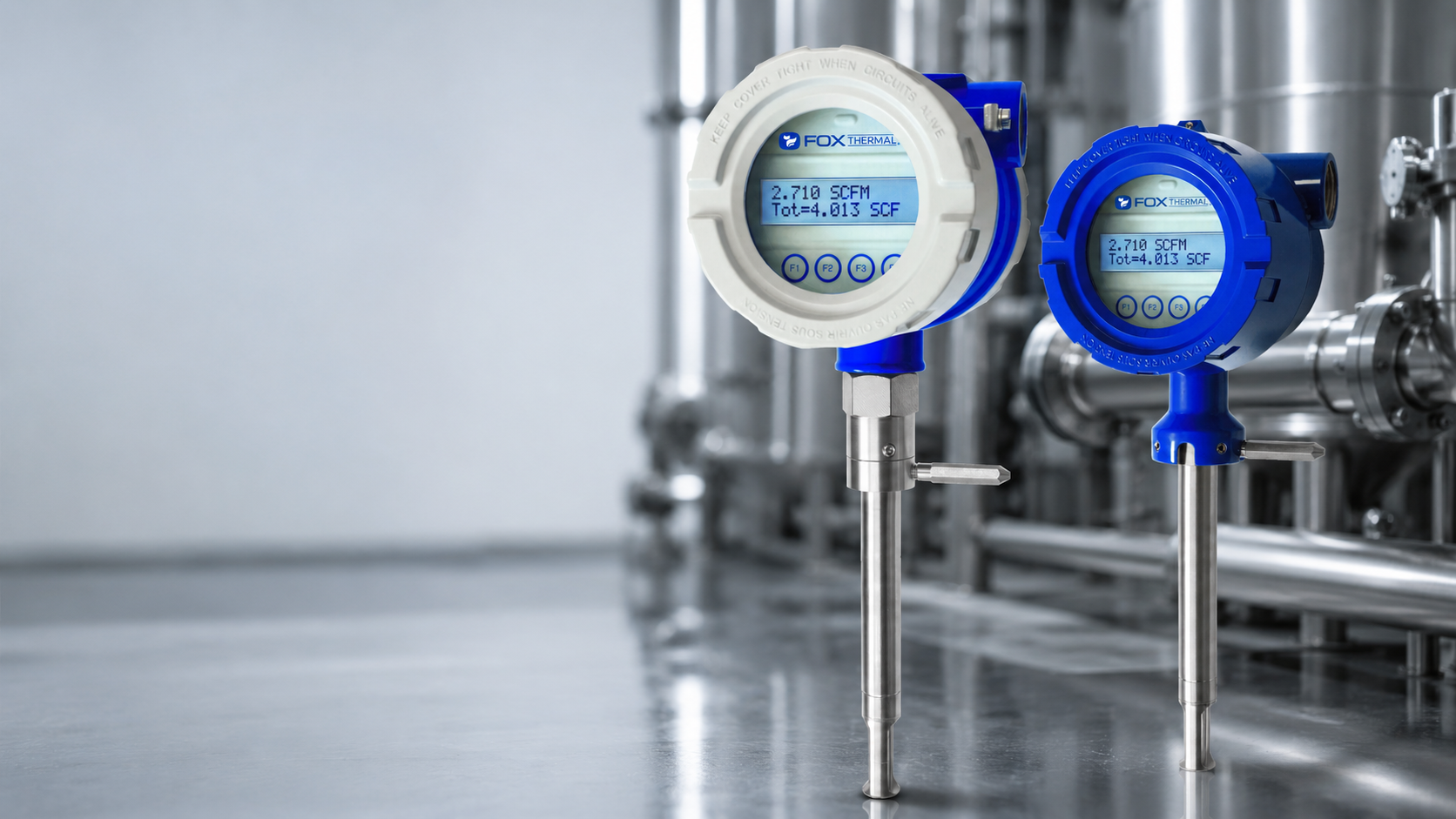
Fox Thermal’s flow meters support configured gas selections and mixtures, including natural gas, biogas, digester gas, vent gas, and flare gas. These options support defined-stream measurement in conventional and renewable gas processes.
Every application still requires review. Gas composition, flow range, pressure, temperature, and moisture can affect meter selection and performance.
Vent Gas and Collected Compressor Leakage
In a properly routed vent line, flow measurement can show how much gas moves through the pipe and when flow occurs.
Collected compressor packing leakage is another potential application. When the gas is routed through a suitable measurement point, operators can track the stream and compare changes over time. This measures collected gas; it does not detect an uncontained leak remotely.
Prepare for What’s Next With a Gas Measurement Review
Start with a facility-level review instead of trying to predict the next regulatory deadline.
- Map the streams. Identify where methane-containing gas is produced, consumed, collected, recovered, vented, or routed to combustion.
- Identify information gaps. Separate directly measured streams from estimates and uncharacterized releases.
- Match the tool to the question. Distinguish leak location, in-pipe flow, gas composition, and facility-wide emissions assessment.
- Review application conditions. Confirm flow range, pressure, temperature, composition, moisture, and installation requirements.
- Connect information to action. Establish who reviews changes, investigates discrepancies, and documents follow-up.
- Track relevant expectations. Monitor the jurisdictions, customers, and reporting frameworks that apply to your operation.
This approach supports readiness without assuming that every market will adopt the same rules or schedule.
Know Today’s Flows. Plan Tomorrow’s Measurement.
Methane regulations, monitoring technologies, and commercial priorities will continue to change. Operators do not need to wait for every deadline to be finalized before identifying where better gas flow data could support their operation.
Fox Thermal helps customers evaluate defined gas measurement applications based on real process conditions, including flow range, gas composition, data needs, and calibration verification.
Select Instrumentation With Operation and Maintenance in Mind
For suitable applications, thermal mass flow meters measure gas mass flow without separate pressure or temperature compensation. Fox Thermal meters offer low-flow sensitivity, negligible pressure drop, and no moving parts. Typical turndown is 100:1, with up to 1000:1 available for some applications.
Those capabilities must be matched to the actual stream. A meter needs to perform across the expected operating range—not simply accommodate the maximum flow.
Use Fox Thermal’s Help Me Choose tool to narrow your meter options in less than a minute. Then use the Online Configurator to match the recommended model to your process and system requirements. Send the resulting AppID to sales@foxthermal.com to request a quote from a Fox Thermal Partner.
Frequently Asked Questions
Can a gas flow meter directly determine methane emissions?
A meter can quantify a suitable methane-containing gas stream, but determining methane emissions also requires knowing the gas composition, destination, and applicable reporting method. Gas routed to recovery or combustion should not automatically be counted as methane emitted.
Can Fox Thermal meters measure both natural gas and biogas?
Yes, for suitable applications that include natural gas, biogas, and digester gas. Selection requires review of composition, flow conditions, installation requirements, and potential condensation.
How can flow measurement support maintenance planning?
Measurements can establish a baseline and help operators investigate changes in a defined stream. In applications such as collected compressor packing leakage, comparing data under similar conditions can support equipment review and evaluation of maintenance results. Flow data supports judgment; it does not independently diagnose every equipment problem.