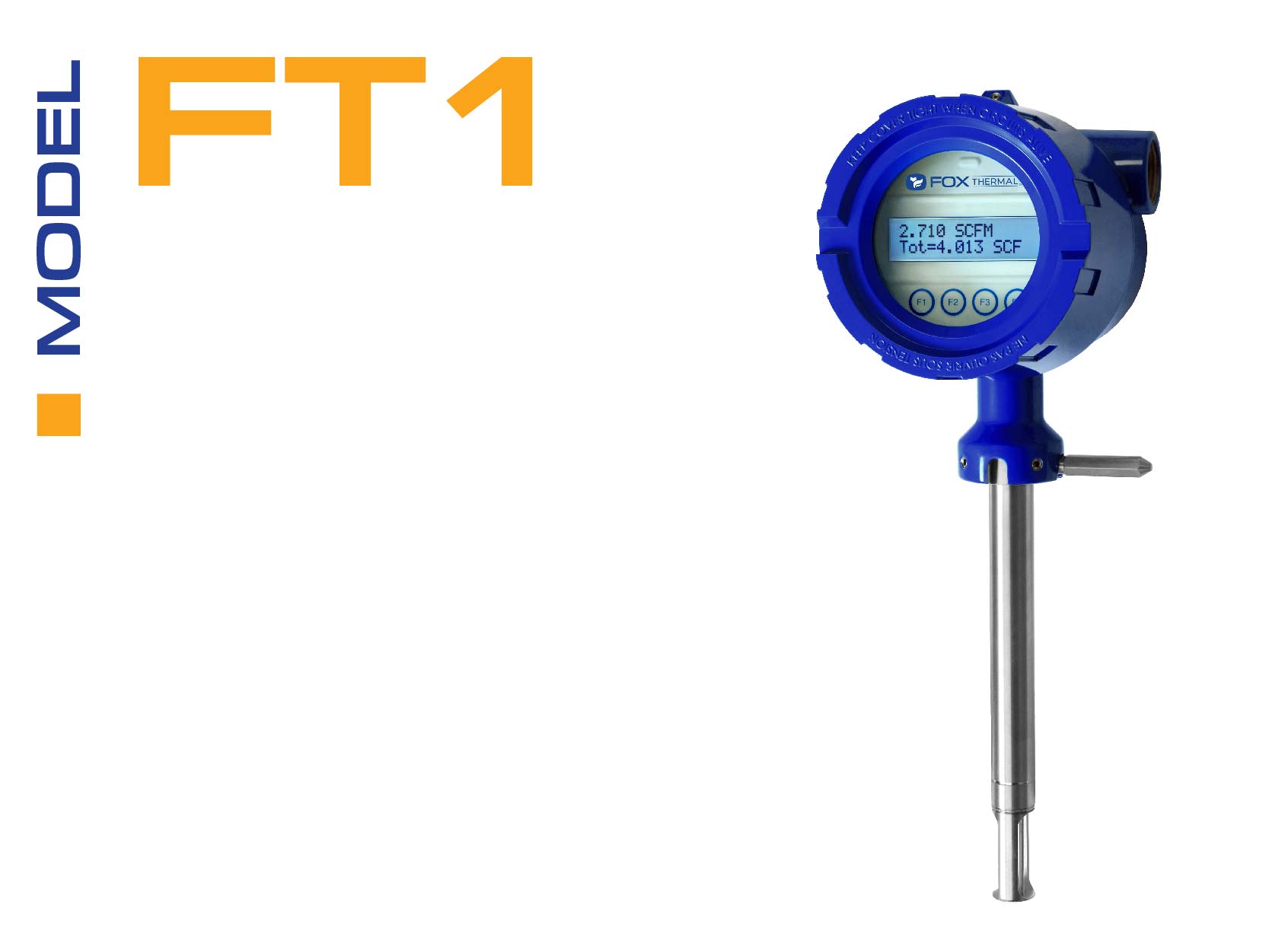
Model FT1
Cost Effective Solution
- Insertion & Inline Styles
- DDC-Sensor™ Technology
- Gas-SelectX® Gas Selection Menu
- CAL-V™ Calibration Validation

Thermal gas mass flow meters outperform other flow measurement technologies, and Fox Thermal leads the industry for accuracy, quality, and innovative design.
Fox is the only thermal mass flow meter manufacturer with digital sensor technology.
Key Features:
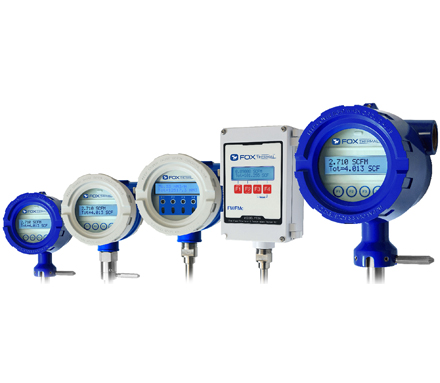
Unlike many competing gas flow meters, thermal mass flow meters measure gas flow without moving parts like rotors. This design makes thermal mass flow meters less prone to mechanical issues and much easier to maintain.
Many flow measurement tools measure volumetric flow or the space that gas molecules occupy. Thermal flow meters directly measure mass flow, or the number of gas molecules within a space, providing more accurate data.
Since Fox Thermal Mass Flow Meters directly measure mass flow, they are not influenced by the temperature and pressure changes that volumetric flow meters may require additional compensation to overcome.
All thermal gas mass flow meters from Fox utilize the thermal sensing principle, a proven, accurate direct mass flow measurement technology. This technology performs at high levels of accuracy for a wide variety of gases.
Fox Thermal flow meters use a constant temperature differential (constant ΔT) technology to measure the mass flow rate of air and gases.
Fox Models FT2A and FT3 are equipped with the PowerPro™ Sensor, while Models FT1, FT4A & FT4X have the DDC-Sensor™.
Both thermal mass flow sensors consist of two temperature sensors, or Resistance Temperature Detectors (RTDs). The sensor elements are constructed of a reference-grade platinum wire wound around ceramic mandrels inserted into stainless steel tubes.
Product Features:
Fox Thermal products are used to measure gas flow in a wide range of industries, including industrial plants, process heating facilities, water and wastewater treatment plants, and oil and gas upstream/production and midstream.
Other common applications include emissions monitoring, biogas flows, and monitoring compressed air lines for losses.
For a full list of industries and applications, visit our applications page.
View All Applications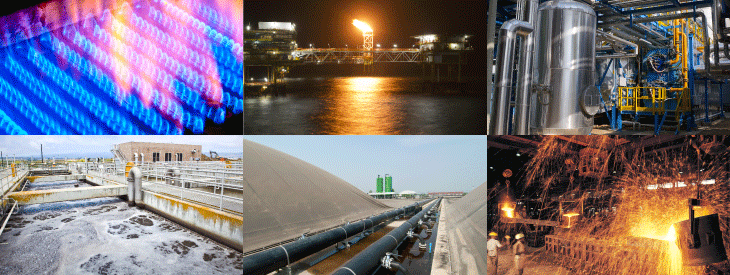
Just answer a few questions about your application and find out which Fox product is right for you.
Take your result from Step 1 and plug it into the Configurator Tool to make adjustments for your particular needs.
Submit your unique application and get contacted by a Fox Thermal expert with your quote.
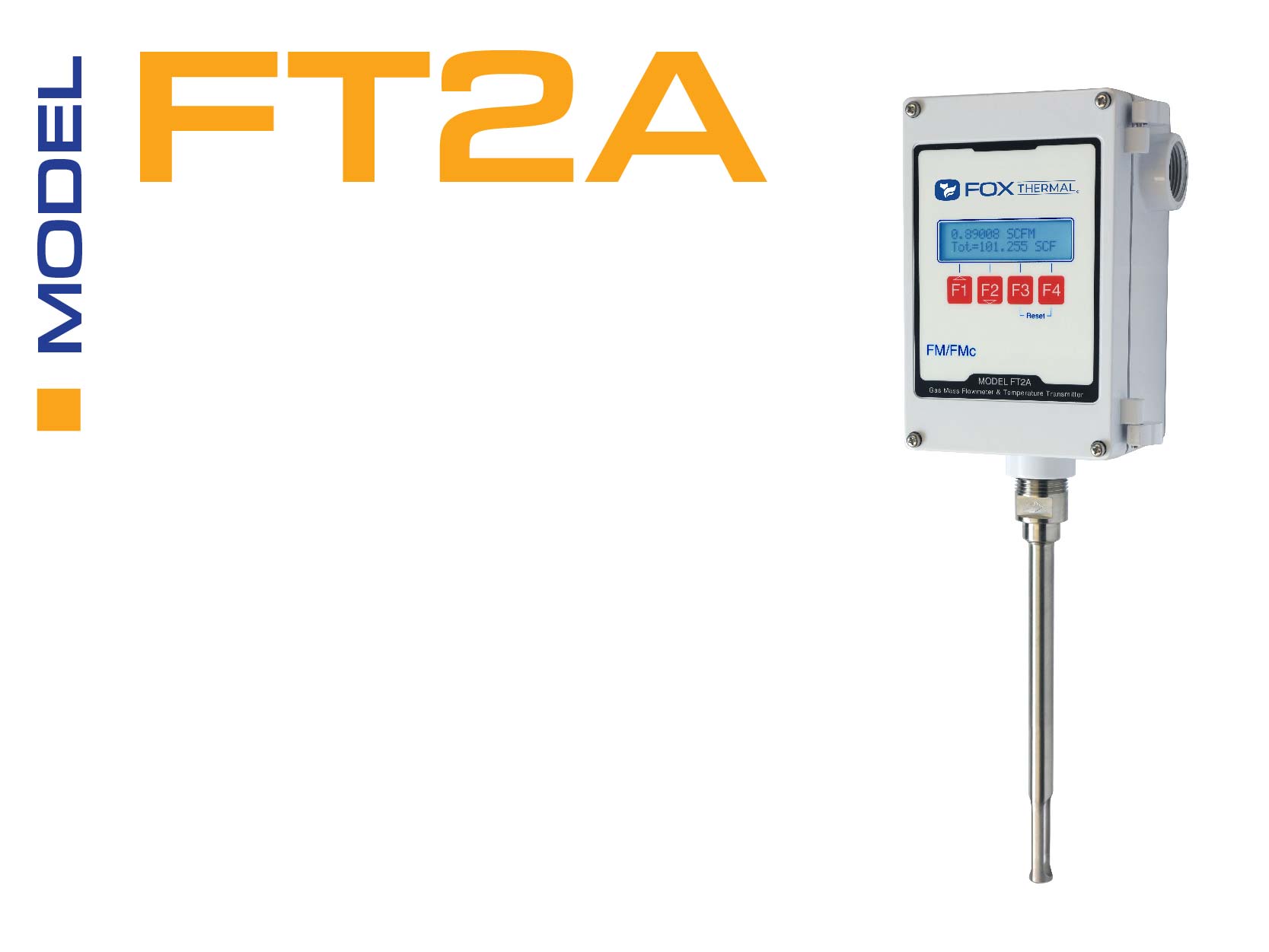
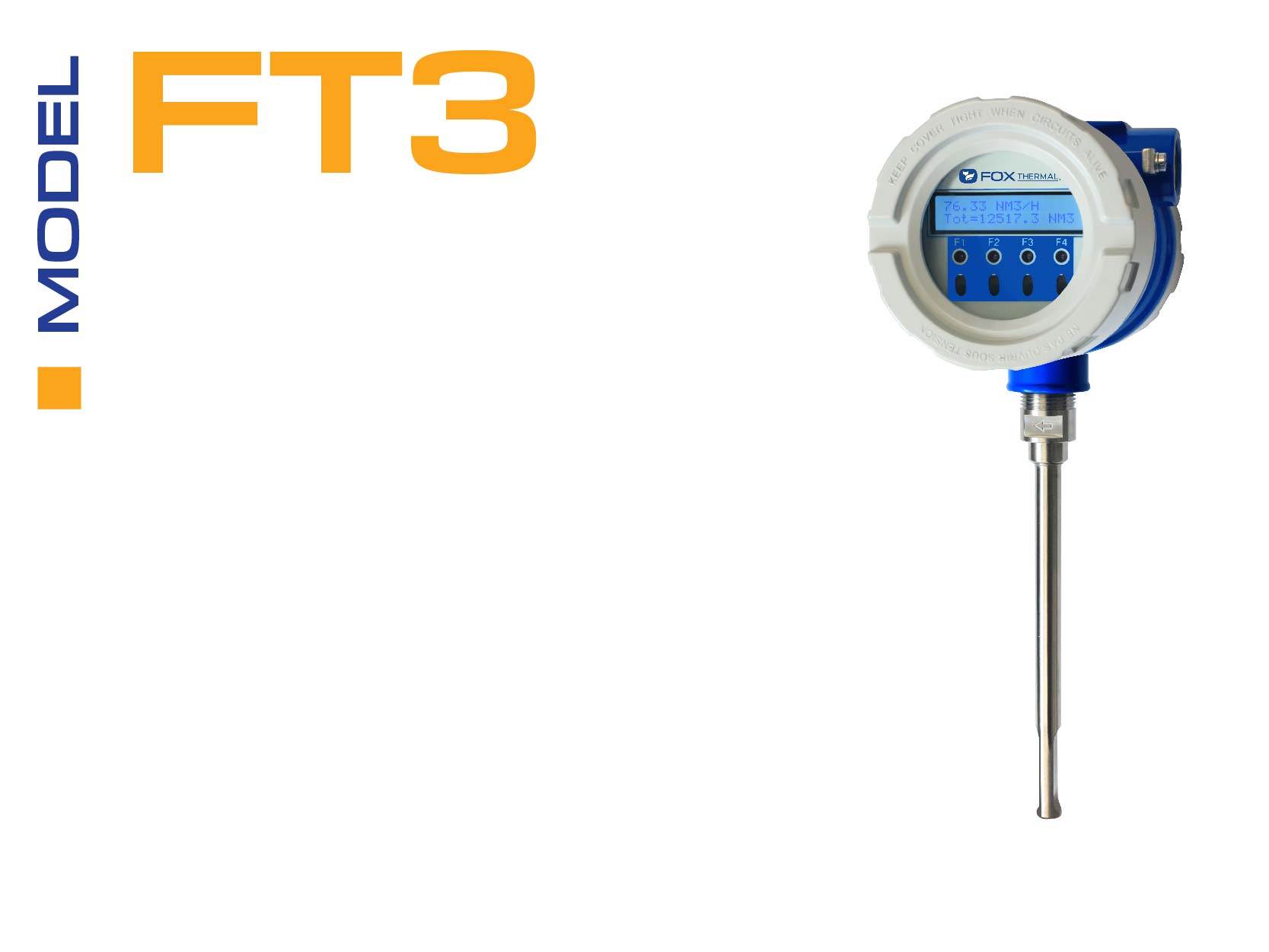
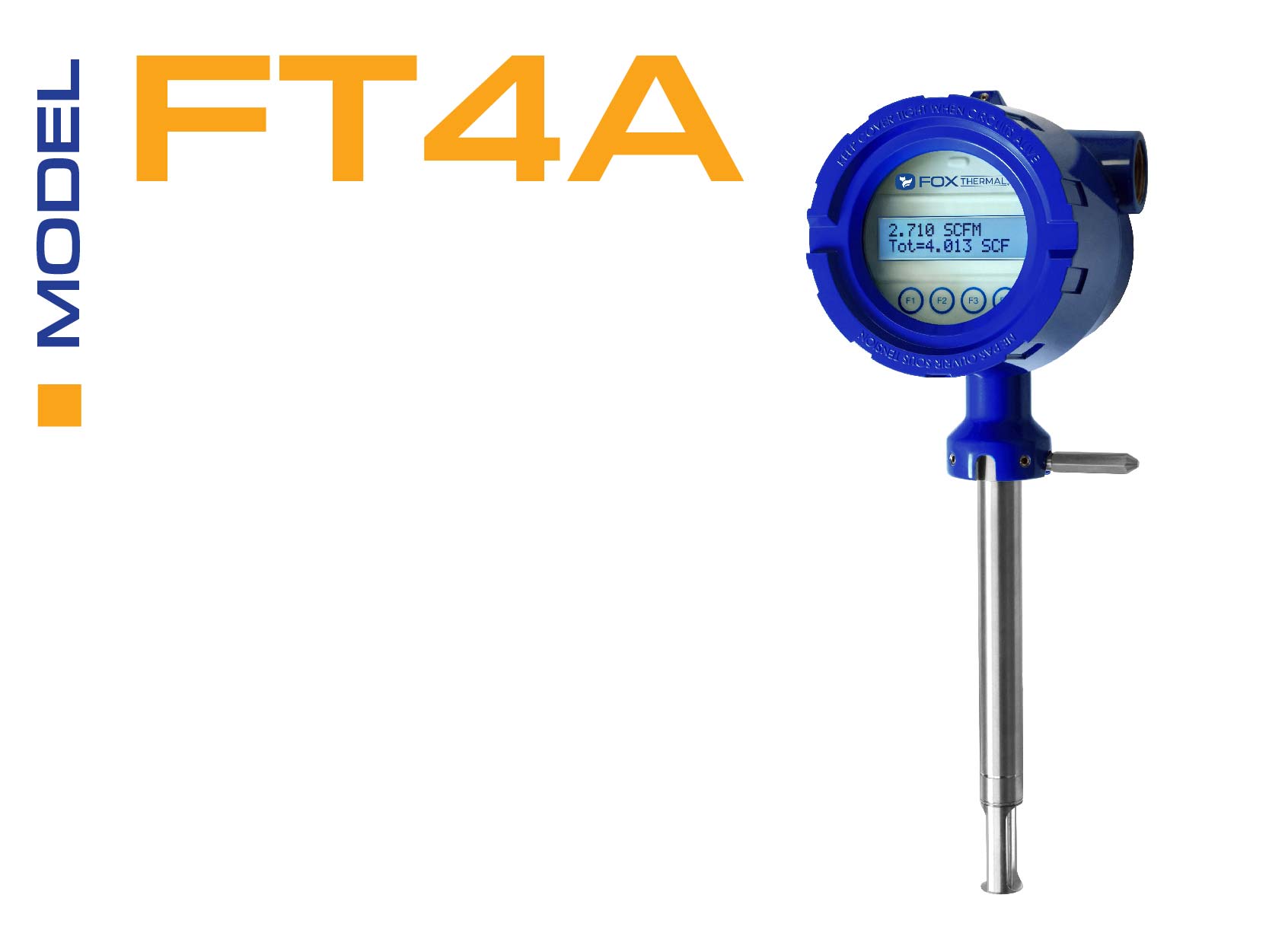
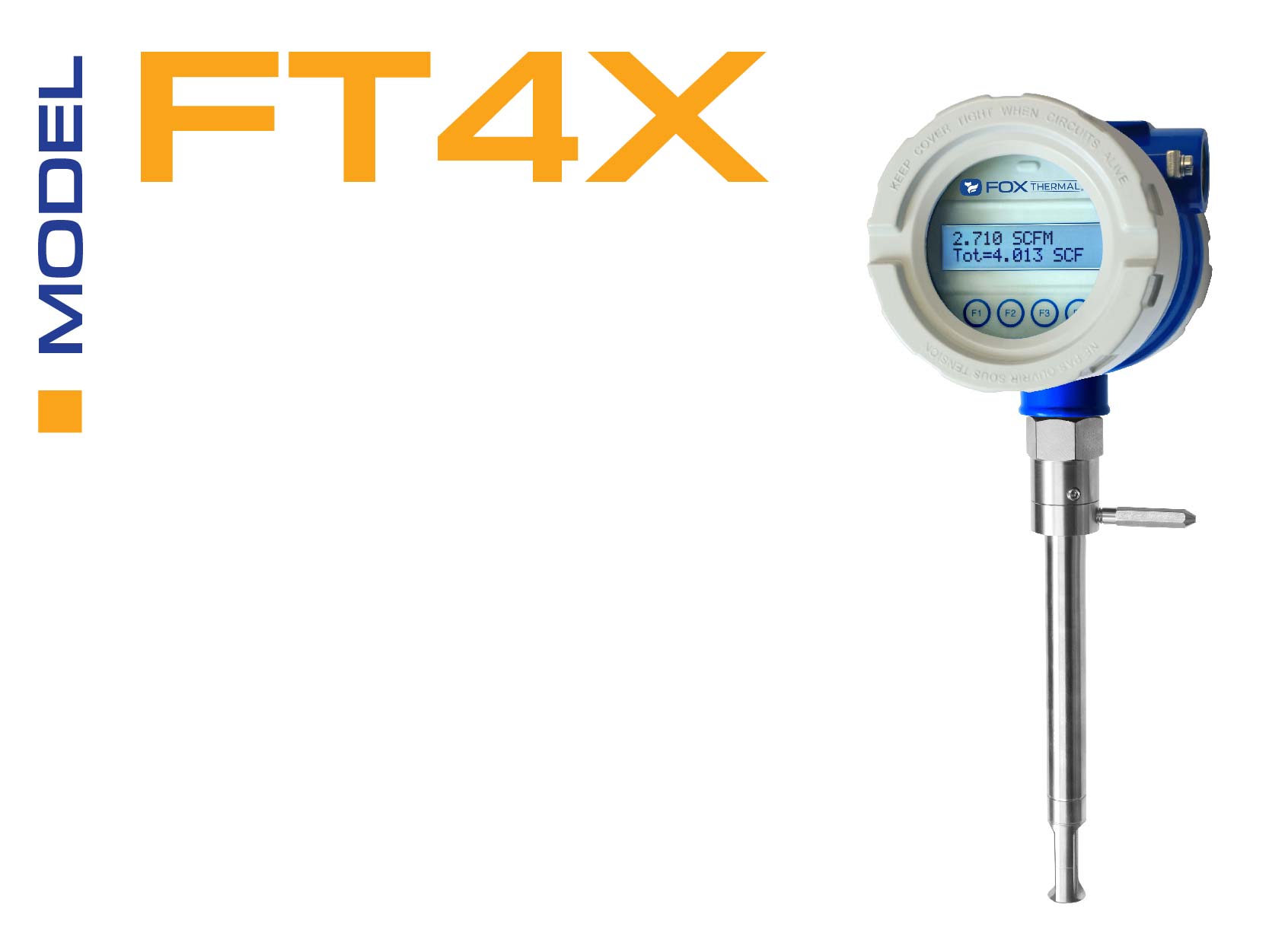
Take a closer look at the full line of Fox's meters and get help figuring out which Fox product is the right choice for your industry or application.
Explore the key differences between thermal mass flow meters and other technologies, plus what makes Fox Thermal the better choice for virtually any application.
Download data sheets, product manuals, and product literature for Fox Thermal's full line of thermal mass flow meters.
How do Fox Thermal gas mass flow meters work?
Fox Thermal gas mass flow meters use a thermal sensing principle called constant temperature differential (constant ΔT) to directly measure the mass flow of air and gases. The sensor has two RTDs: one measures the gas temperature, and the other is kept a fixed number of degrees hotter; the meter measures how much power is needed to keep that temperature difference constant, which is proportional to gas mass flow. The electronics and DDC‑Sensor™ convert this into linear outputs for mass flow, totalized flow, and temperature—without separate temperature or pressure compensation. This makes Fox meters simple to install and accurate over a wide turndown for industrial gas applications.
Which gases can thermal mass flow meters measure?
Fox Thermal gas mass flow meters are designed for dry air and gases. They can measure many pure and mixed industrial gases. Common applications include natural gas, compressed air, biogas and digester gas, flare gas and vent gas, landfill gas, and LPG (propane, butane, and their mixtures. Fox Thermal models with Gas‑SelectX® let users choose pure gases (such as air, methane, carbon dioxide, and others) or define custom gas mixes in the meter for accurate measurement when compositions change over time. This flexibility helps Fox meters handle challenging mixed‑gas applications in oil and gas, wastewater, and biogas facilities.
Why do industrial plants struggle with gas flow meters?
Industrial plants often struggle with gas flow meters because many technologies require separate temperature and pressure compensation, complex installation, and frequent recalibration to maintain accuracy. These factors increase downtime, engineering workload, and total cost of ownership when meters are used for process control, energy management, or emissions reporting. Thermal gas mass flow meters from Fox directly measure gas mass flow without external temperature or pressure compensation, which simplifies installation and reduces sources of error. Fox designs its meters for industrial applications where reliability, repeatability, and long‑term stability are critical, helping plants avoid unexpected maintenance and measurement uncertainty.
What causes gas flow meters to give inconsistent readings?
Gas flow meters can give inconsistent readings when the flow profile is disturbed, the meter is installed in the wrong location, or process conditions change beyond the instrument’s design limits. Contamination on the sensor, insufficient straight‑run upstream/downstream, changes in gas composition, or poor temperature/pressure compensation can also degrade accuracy and repeatability over time. Fox Thermal meters mitigate many of these issues through robust sensor design, direct mass flow measurement, and clear installation guidelines tailored to industrial piping. Following Fox’s recommended straight‑run requirements, process connections, and configuration practices helps plants maintain stable readings and reduce troubleshooting time.
What is the best thermal mass gas flow meter?
The “best” thermal mass gas flow meter depends on the application, gas type, and installation conditions, but high‑performing meters share several traits: they deliver direct mass flow measurement, wide turndown, stable accuracy, and rugged sensors that withstand industrial environments. A strong product also offers flexible communications, easy integration with control systems, and clear documentation so engineers can specify and commission it confidently. Fox Thermal has specialized in thermal gas mass flow meters for decades and offers insertion and inline meters designed for natural gas, compressed air, biogas, flare gas, and other industrial gases. Many Fox meters use a digitally controlled thermal sensor and advanced electronics to improve accuracy and repeatability, making them a leading choice when plants need reliable gas measurement and minimal downtime.
Which gas mass flow meters are easiest to install and commission?
Gas mass flow meters are easiest to install and commission when they require minimal pipe modifications, have clear menu‑driven setup, and do not depend on external transmitters for temperature and pressure compensation. Insertion‑style meters that can be installed through a tap, along with built‑in diagnostics and digital communications, typically reduce installation effort and startup time. Fox Thermal offers gas mass flow meters with insertion and inline options designed to fit common industrial piping without extensive modifications, and its electronics provide isolated 4–20 mA outputs and digital interfaces for integration. These features, combined with Fox’s application support, make its thermal gas mass flow meters straightforward for engineers and technicians to install, commission, and maintain.